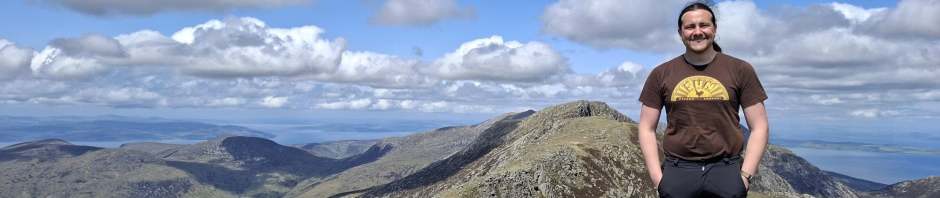
This summer took me back to Arran, not just for work but to carry out the fieldwork for my dissertation. Between counting plants, battling midges, spotting wildlife and speaking to people about one of the island’s most controversial conservation topics, it’s been a fascinating few months. With the fieldwork now complete and the social assessment underway, I wanted to share a little about the project and what comes next.
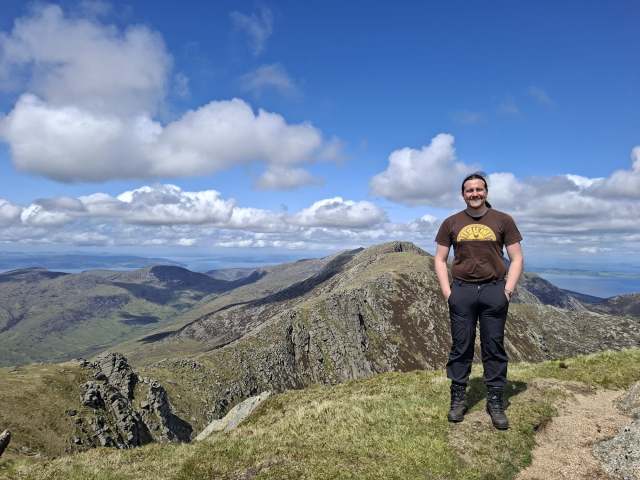
At the beginning of May, I made a fleeting visit back home before heading back to the Isle of Arran to work for the summer. I’d spent time working on the island the previous year, but this time there was a bit of a difference. I was returning to carry out the fieldwork for my dissertation, collecting the data and research that will eventually form the basis of my final project.
Read more: A Summer of Fieldwork on Arran: Exploring the Plant Ecology and Perceptions of Deer CullingMy dissertation focuses on an environmental and social assessment of red deer culling in the north of Arran. On the environmental side, I want to understand how deer management influences plant diversity and woodland regeneration. To do this, I compared two different sites: one where deer culling was actively taking place and another where deer had been excluded through fencing. By surveying vegetation at both locations, I could look at differences in plant diversity and species richness between the two approaches.
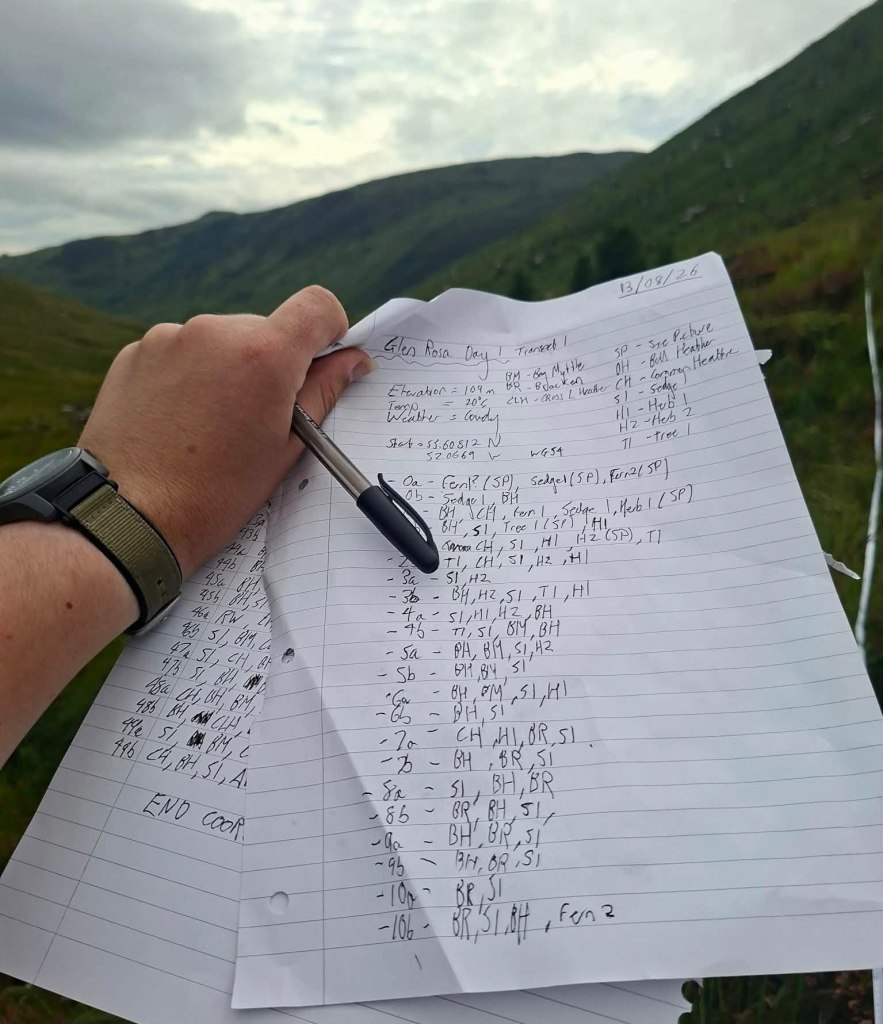
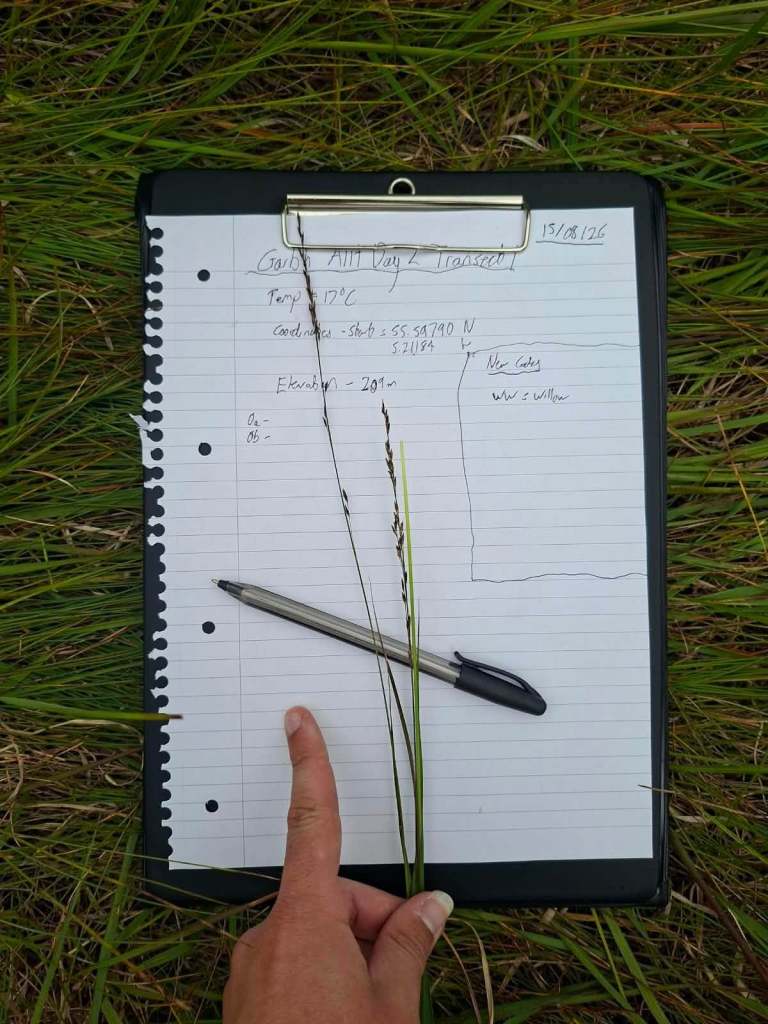
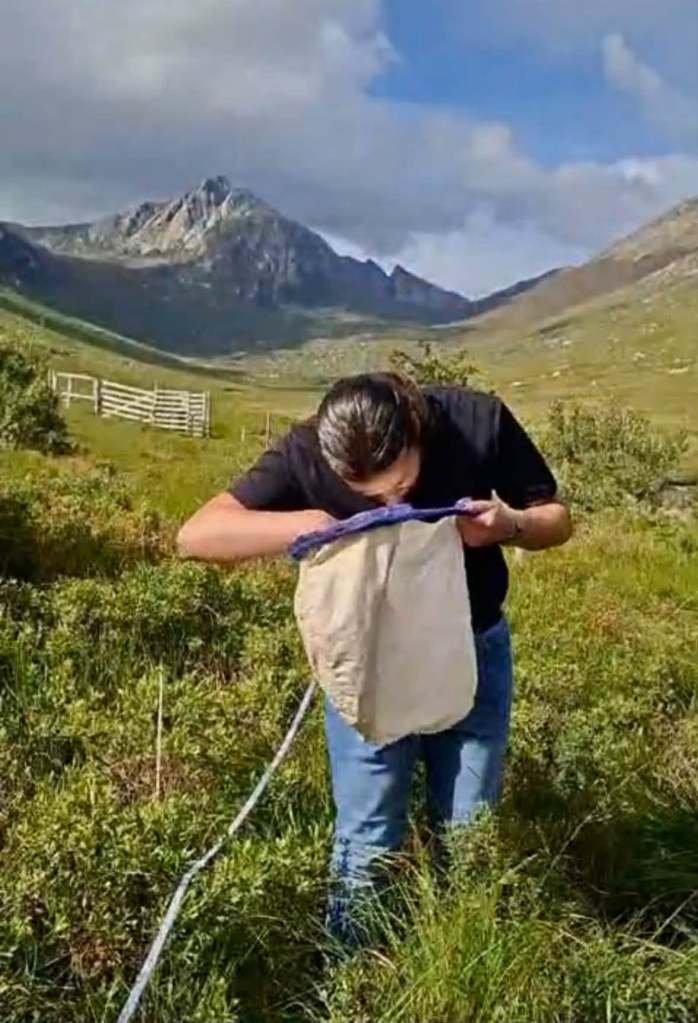
The reason deer management is such an important issue is that deer no longer have any natural predators in the UK. Species such as wolves and bears disappeared long ago, leaving no natural mechanism to control deer populations. Without management, deer numbers can increase to a point where intense grazing suppresses woodland regeneration by preventing young trees and shrubs from becoming established.
At the same time, deer culling remains a divisive issue. People love seeing deer and often form a strong emotional connection with them. I certainly do. There can be a real tension between valuing these animals and recognising the ecological arguments for managing their numbers. This debate often sits at the intersection of animal welfare, conservation and landscape restoration.
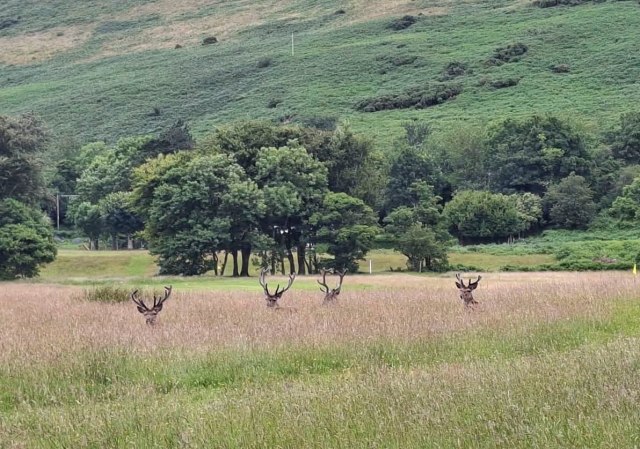
That tension was one of the main reasons I wanted a social assessment to sit alongside the environmental research. As well as collecting data, I wanted to explore how people felt about deer culling and whether opinions differed between groups such as residents and visitors to the island.
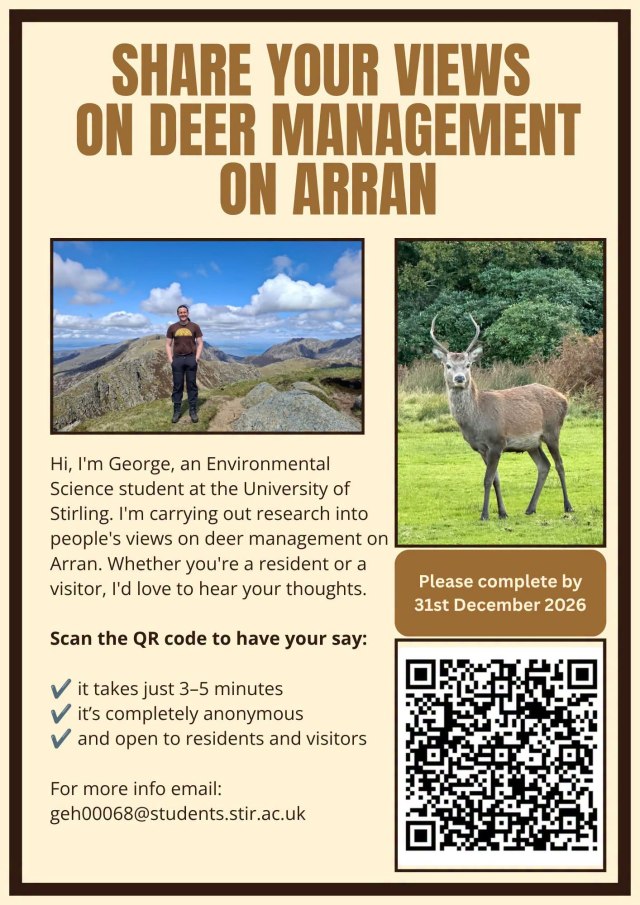
Alongside the environmental surveys, I developed a questionnaire for the social assessment. Participants are asked whether they are residents or visitors and about their views on deer culling. The survey also includes a short information section explaining why deer management takes place and its role in woodland restoration, followed by questions exploring whether that information influences people’s opinions.
If you are an Arran resident or have visited Arran as a tourist (and 18+), I’d be hugely grateful if you could take a few minutes to complete the survey. Every response helps build a clearer picture of public attitudes towards deer management and conservation on the island. The survey will remain open until 31 December 2026.
Survey link: Click here
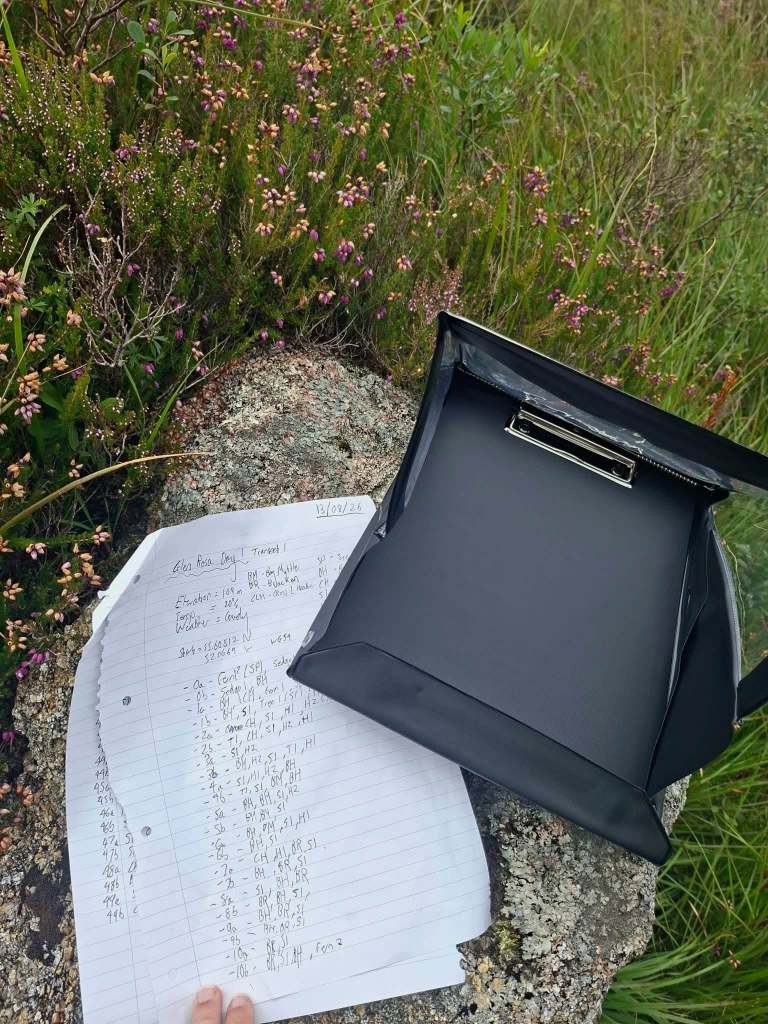
For the environmental assessment, I used transects to record plant species across the study sites. By identifying and counting species along these survey lines, I was able to calculate species richness and compare biodiversity between areas managed through culling and areas where deer had been excluded.
What excites me most about the dissertation is that it goes beyond simply counting plants. It explores the wider relationship between people and nature, and how we respond to some of the more challenging aspects of conservation. Environmental management is rarely straightforward, and deer culling is one of those subjects that forces us to think about the trade-offs between protecting individual animals and restoring ecosystems.
Another reason I chose Arran for my dissertation was the presence of one of the island’s most remarkable species, the Arran Whitebeam. This incredibly rare tree, a hybrid between a Rock Whitebeam and a Rowan, is found only in a handful of glens on the island. It provides a fascinating example of a species that may benefit from successful habitat management and woodland regeneration. Great article about the tree here.
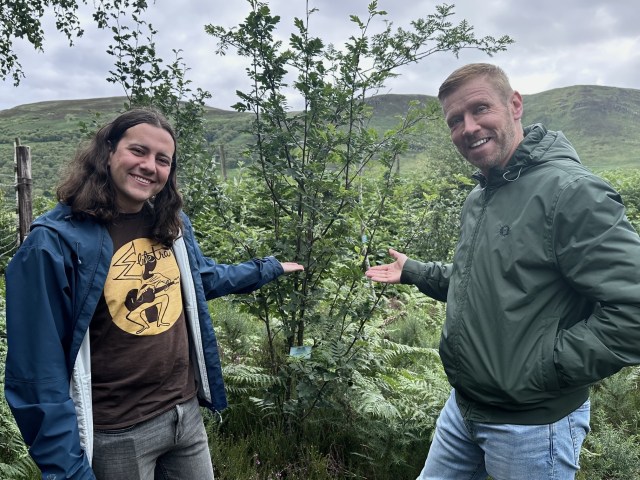
Getting to the point of carrying out the fieldwork was a challenge in itself. Before any surveys could begin, I spent weeks working through ethics applications for both the environmental and social assessments, alongside detailed risk assessments. There was plenty of back and forth with lecturers and supervisors before everything was finally approved. Given the amount of time I was spending in remote areas, often battling through bracken, midges and the ever-present threat of ticks, the risk assessment felt particularly worthwhile. Eventually, after a lot of paperwork and patience, I received the green light to begin the research properly.
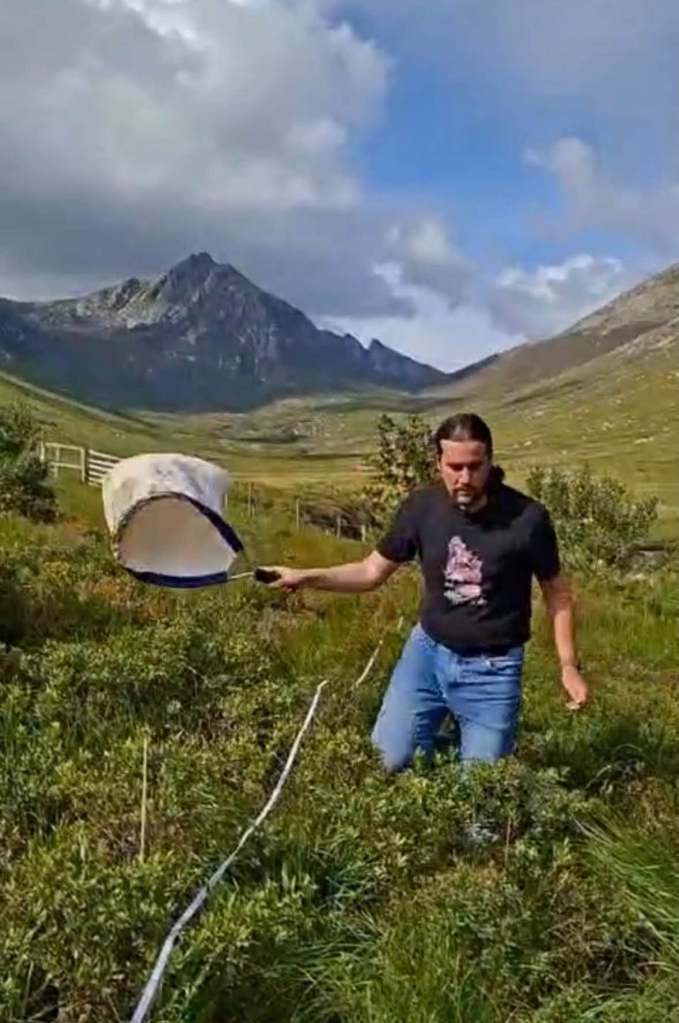
Once fieldwork was underway, my surveys took me across some of Arran’s most spectacular landscapes. From the shadow of the formidable Cir Mhòr in Glen Rosa to more remote corners of the island, I spent my days following transects, identifying plant species and recording ecological data. The work could be demanding and very tiring, but it also provided countless reminders of why Arran is such a special place to carry out environmental research.
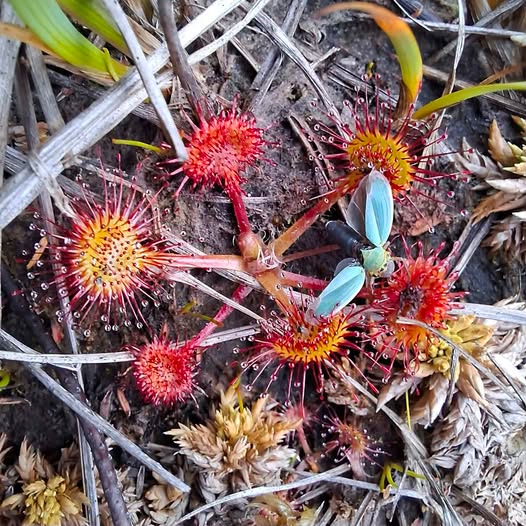
One of the unexpected pleasures of the project was everything I encountered between the surveys. While scouting potential study sites in Gleann Easan Biorach, I came across a round-leaved sundew feeding on a green leafhopper. Sundews regularly catch insects, but there was something striking about the bright turquoise of the leafhopper against the glistening red tentacles of the plant. It was a tiny battle playing out in the middle of a vast landscape and a reminder that even the smallest interactions can be fascinating.
Those moments weren’t limited to the research sites. Whenever I had the chance, I explored more of the island, walking through Glen Rosa, visiting King’s Cave, swimming in the Fairy Pools and following the coastal paths around Doon. Along the way I spotted everything from colourful wildflowers and butterflies to some of the landscapes that make Arran such a remarkable place.
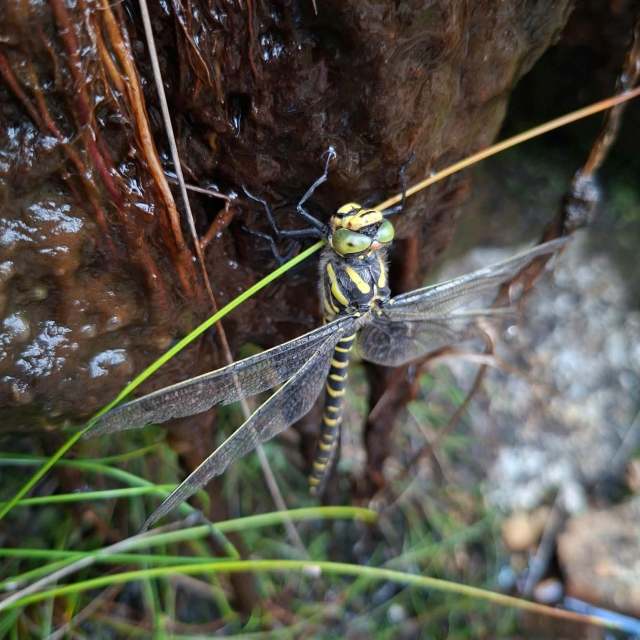
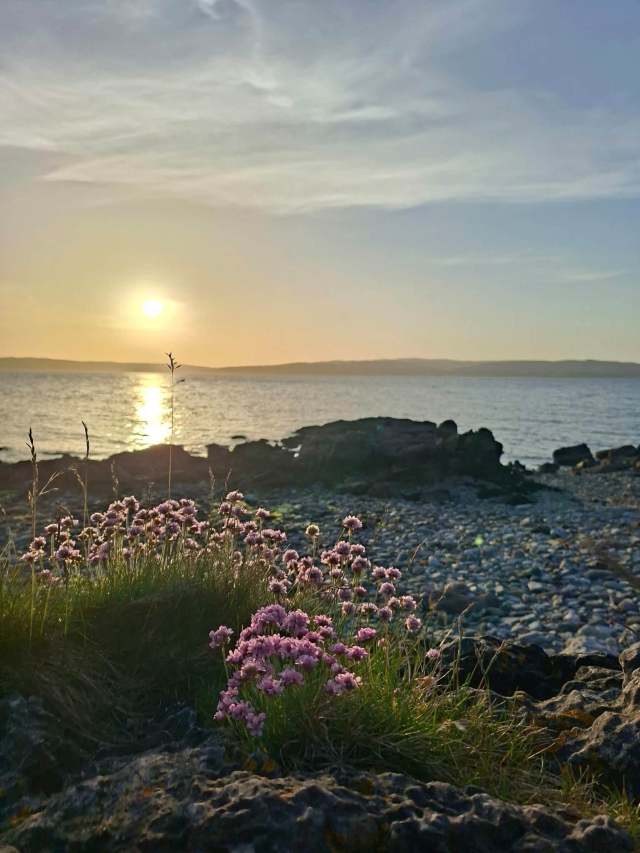
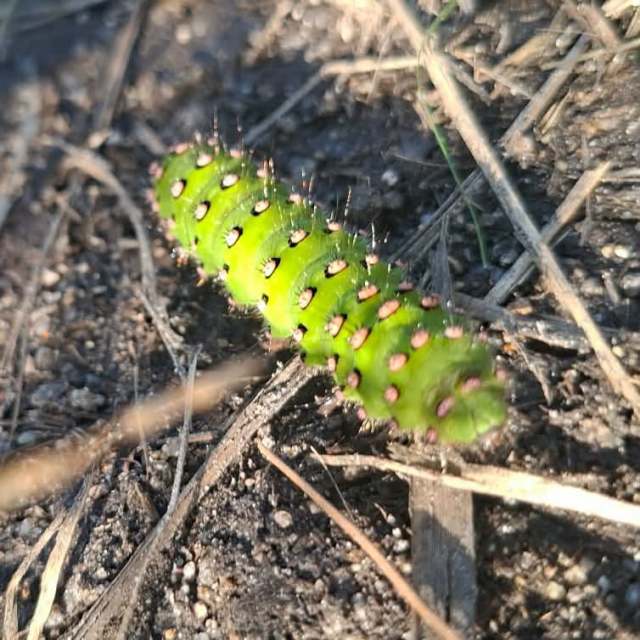
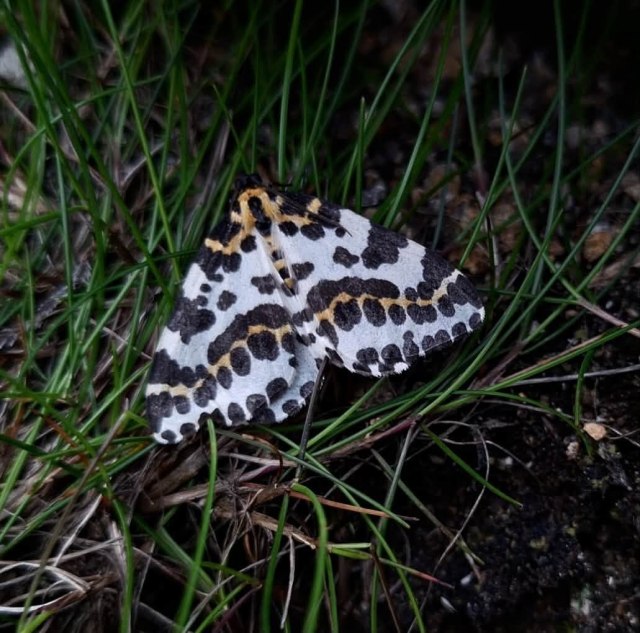
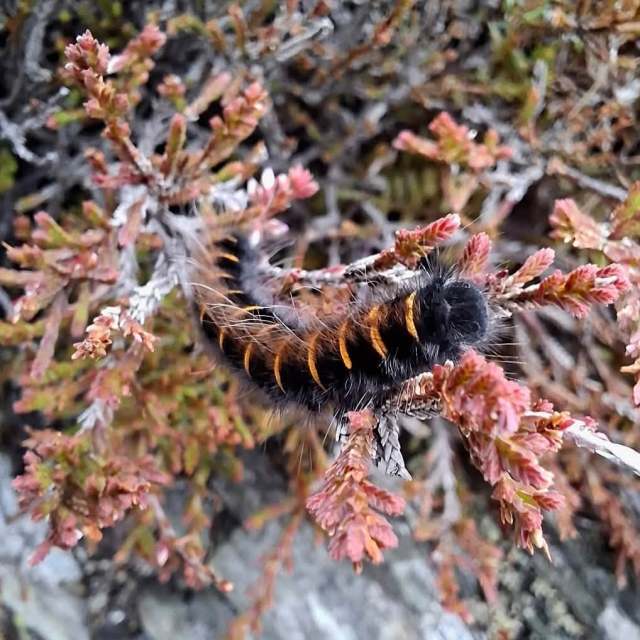
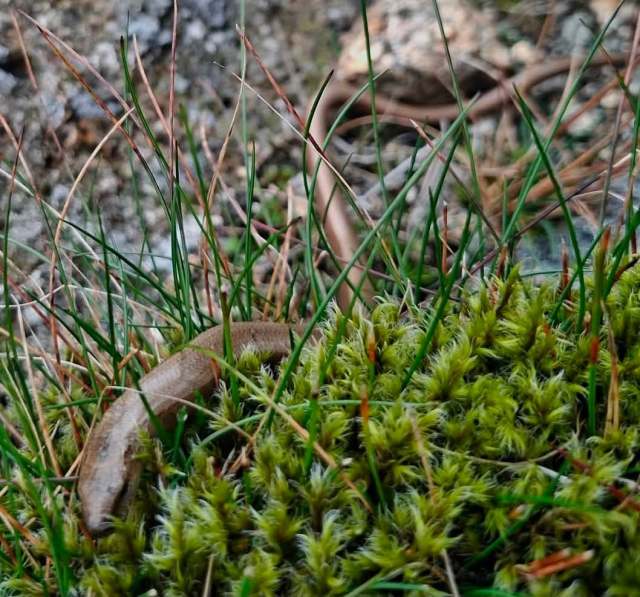
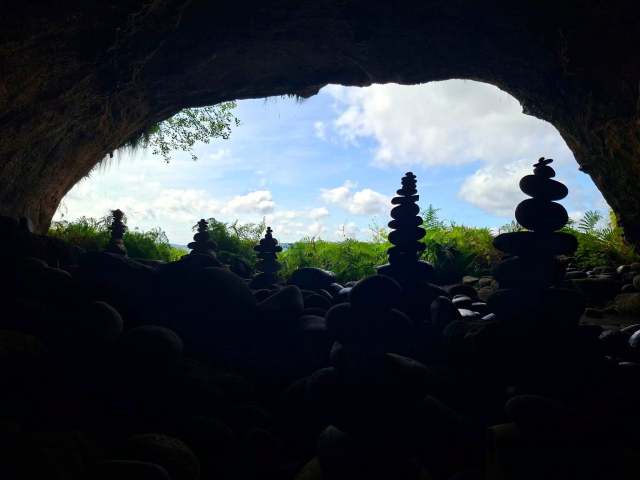
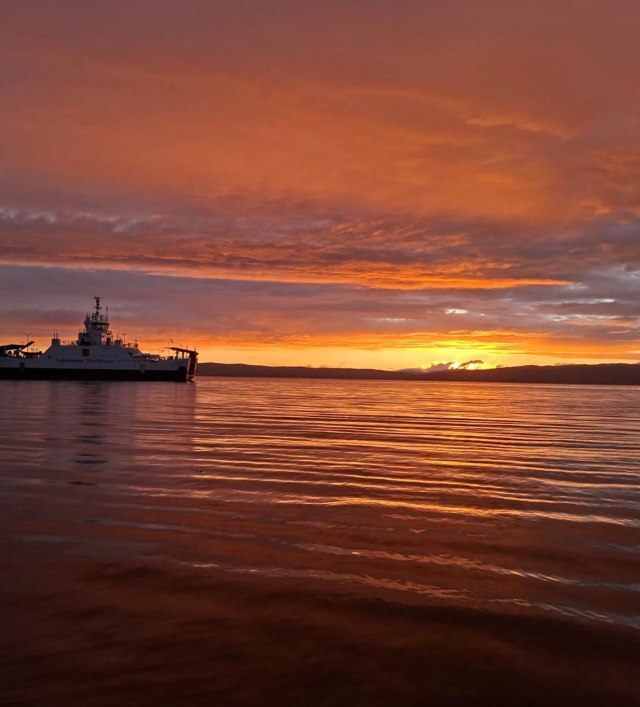
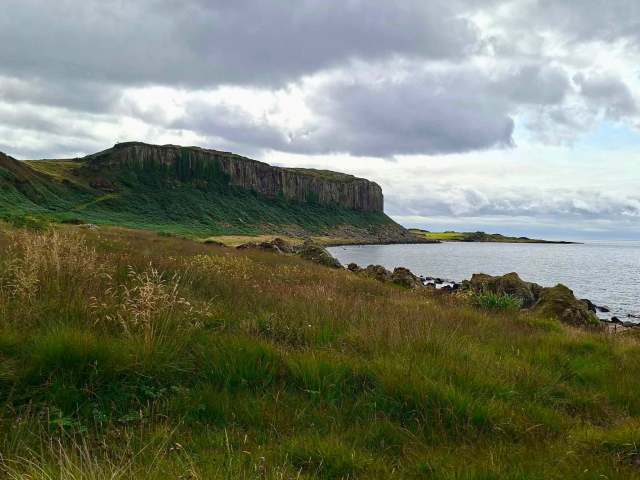
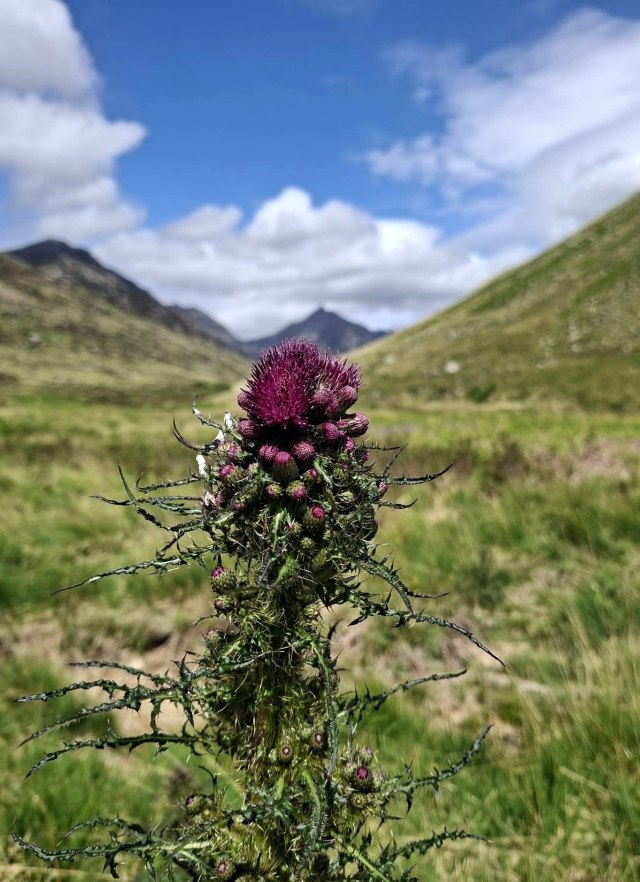
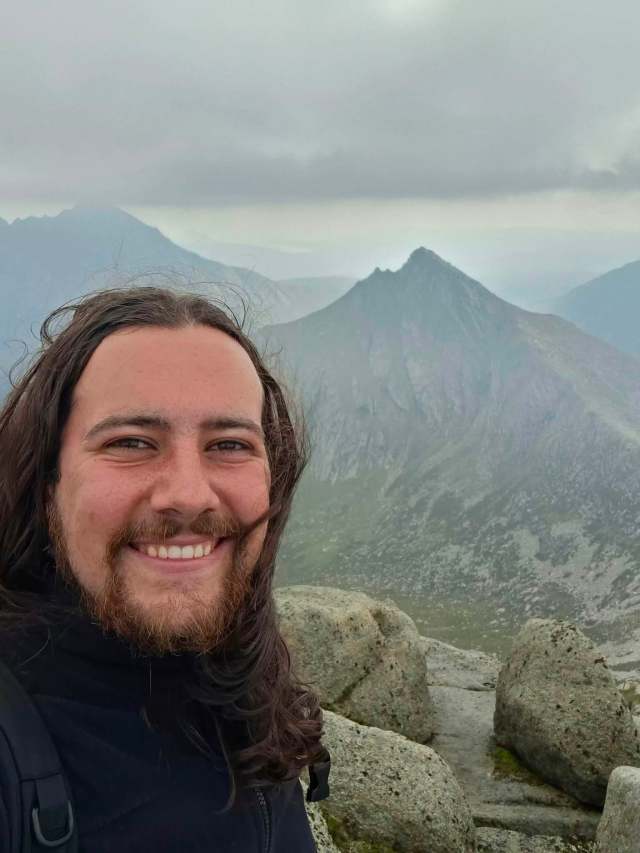
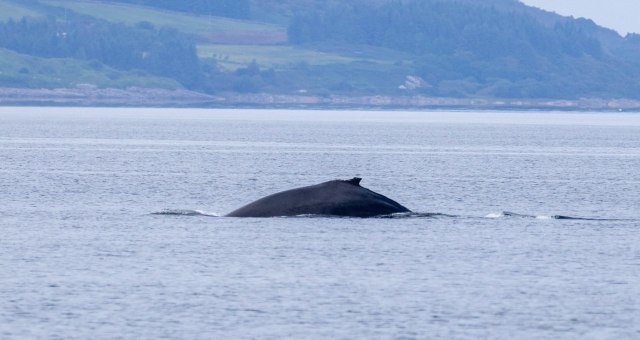
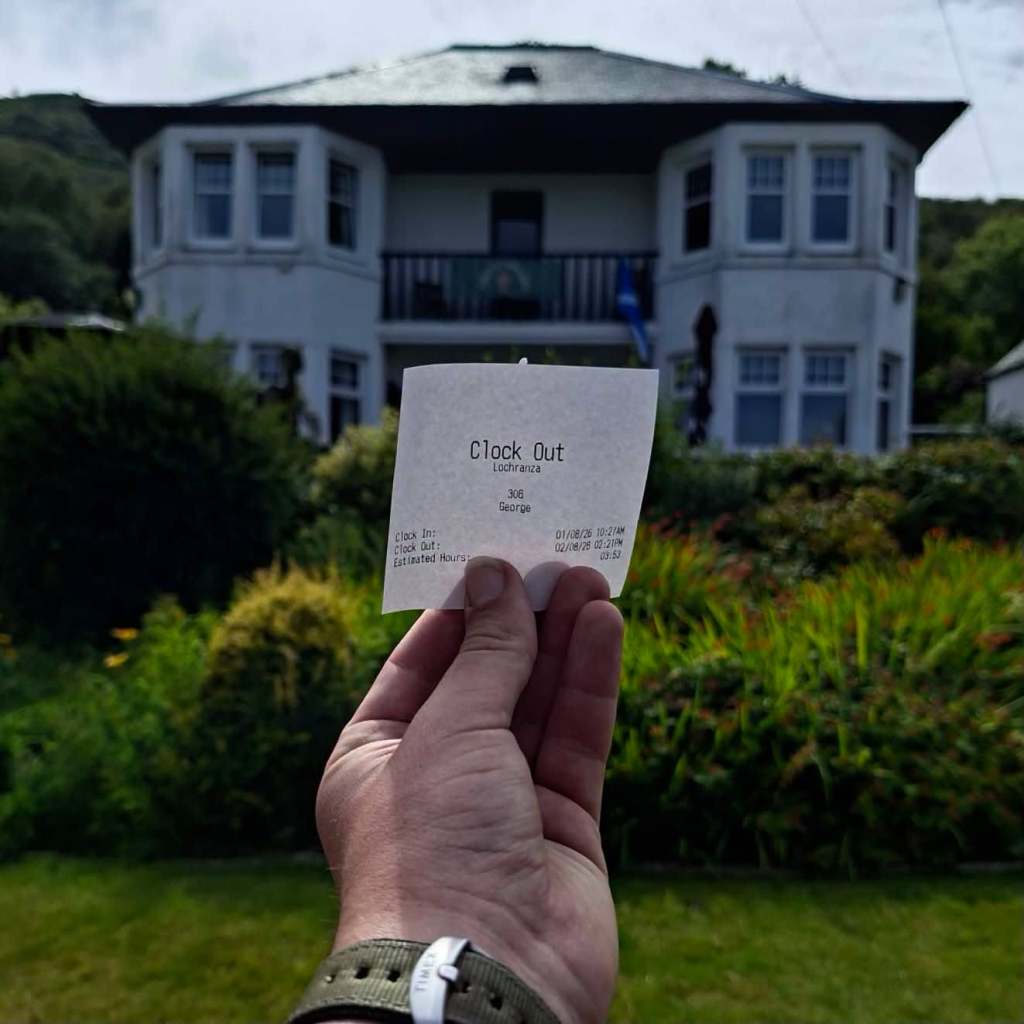
And, of course, there was my home in Lochranza. For me, it became the place of spectacular sunsets, dramatic landscapes, soaring eagles and, for one magical day, a humpback whale.
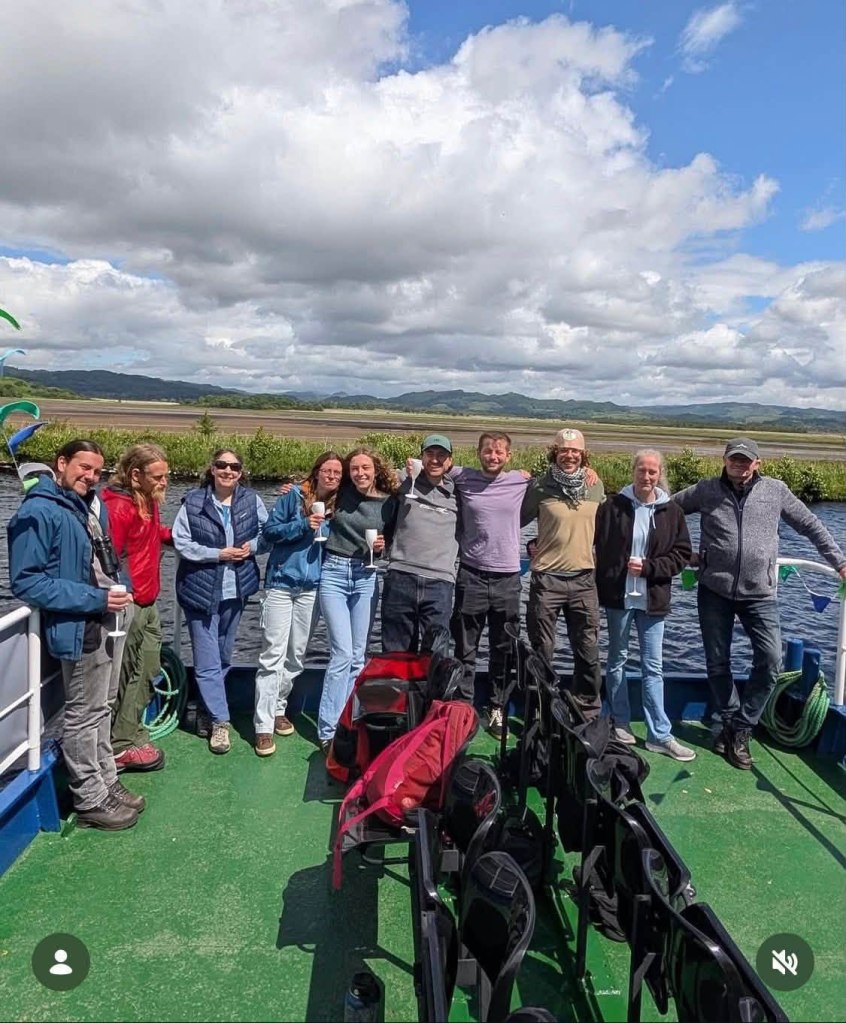
A special mention also goes to my mates in Lochranza. From the team at the Inn to my housemates at the Lochranza Centre CIC, they were a joy to be around and helped me through some tough times. The dissertation may have brought me to Arran, but the people I’ve met along the way were just as important a part of the experience.
Now that the fieldwork has been completed and the social assessment is live, the focus shifts to analysing the findings and bringing the environmental and social strands of the dissertation together. The most interesting part may well be discovering how closely ecological evidence aligns with public opinion, and what that can tell us about the complex relationship between conservation, wildlife management and the people who share these landscapes.
If you live on Arran or have visited the island as a tourist (and age 18+), I’d be incredibly grateful if you could take a few minutes to complete the survey before 31 December 2026. The success of the social assessment depends on hearing as many different perspectives as possible, and every response helps build a better understanding of this complex and often controversial issue.
Survey link: click here


